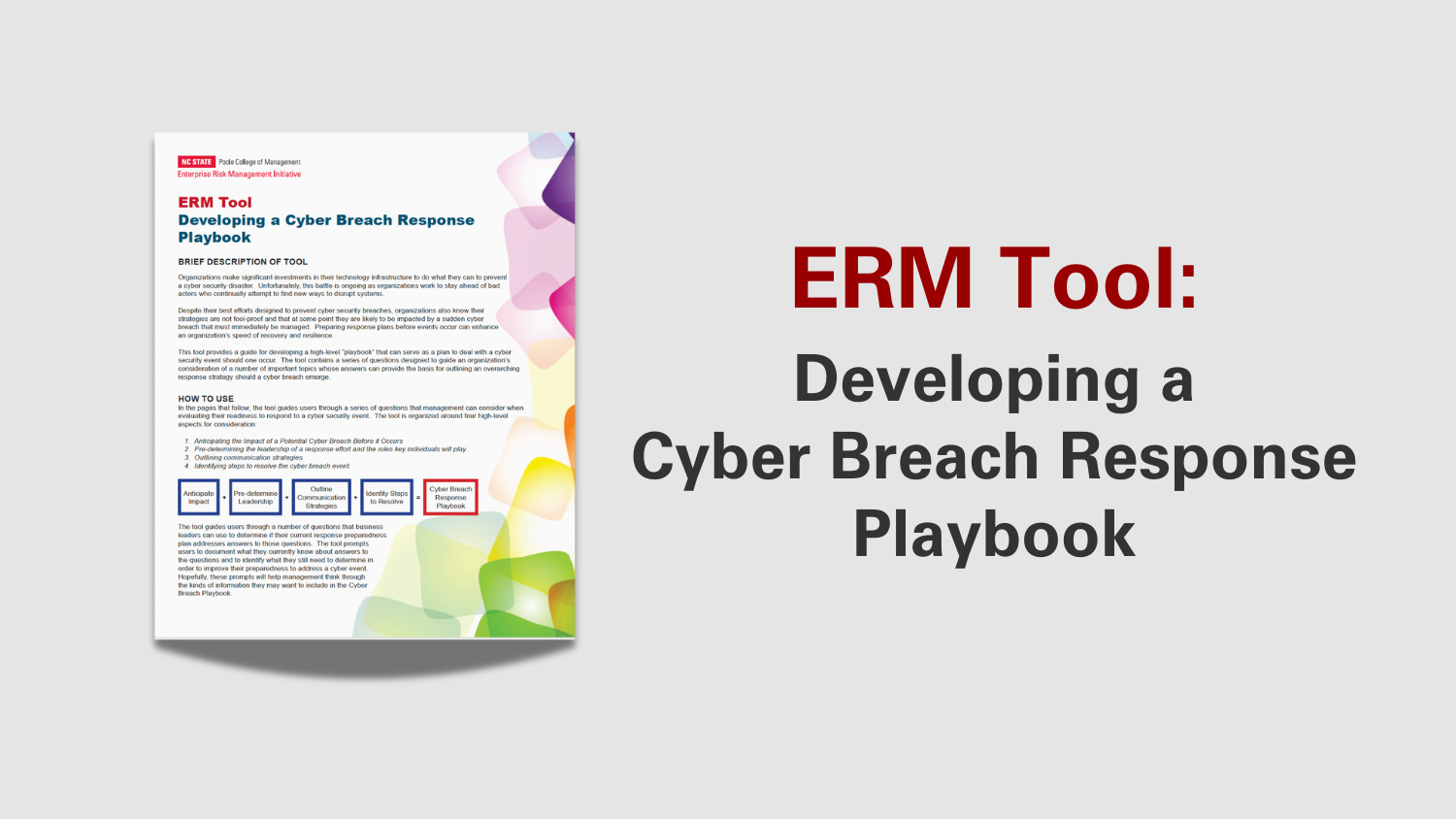
ERM Tool: Anticipating Emerging Risks Linked to Shifting Government Policies

Political and governmental policy environments are complex, evolving and unpredictable. Changes to laws, regulations and implementation policies can create emerging risks that affect an organization’s business model, strategic objectives and ability to create value.
The ERM Tool: Anticipating Emerging Risks Linked to Shifting Government Policies (accessible version in word provided below) from the NC State ERM Initiative provides a structured approach for executive teams to monitor developing government policies and identify those changes that may have the greatest implications for their organizations
The tool helps leaders move beyond the noise surrounding policy developments by focusing attention on the government actions most relevant to the organization’s strategic success. It can also help organizations develop proactive response options before policy changes become more restrictive, costly or disruptive.
What This Tool Helps You Do
- Identify critical business model drivers that are essential to organizational success
- Connect business model drivers to relevant federal policy areas that could affect the organization
- Prioritize potential policy exposures based on importance, likelihood of change and organizational readiness
- Develop response options to reduce the potential impact of policy changes
- Monitor government developments that could signal future changes to prioritized policies
Who Should Use This Tool?
This practical ERM resource is ideal for:
- Enterprise risk management leaders
- Executive leadership teams
- Strategy and business planning teams
- Government affairs and public policy professionals
- Legal and regulatory teams
- Business leaders responsible for critical business model activities
- Boards and senior leaders overseeing emerging risks
Tool Features
- Five-Step Framework: Identify, connect, prioritize, respond and monitor
- Business-Focused: Starts with the organization’s most critical business model drivers
- Policy-Focused: Connects business drivers to relevant government policy areas
- Prioritization Method: Uses importance, likelihood and readiness to calculate a priority score
- Response Planning: Encourages proactive consideration of strategic, operational, supply chain, financial and communication responses
- Ongoing Monitoring: Helps organizations track legislative, regulatory, judicial and executive developments
Explore ERM Tools and Resources
For additional ERM resources, tools, and practical templates, visit our ERM Resource Center.
This tool was developed by Dr. Mark Beasley, Alan T. Dickson Distinguished Professor of Accounting and Enterprise Risk Management Initiative Director at the NC State Poole College of Management.