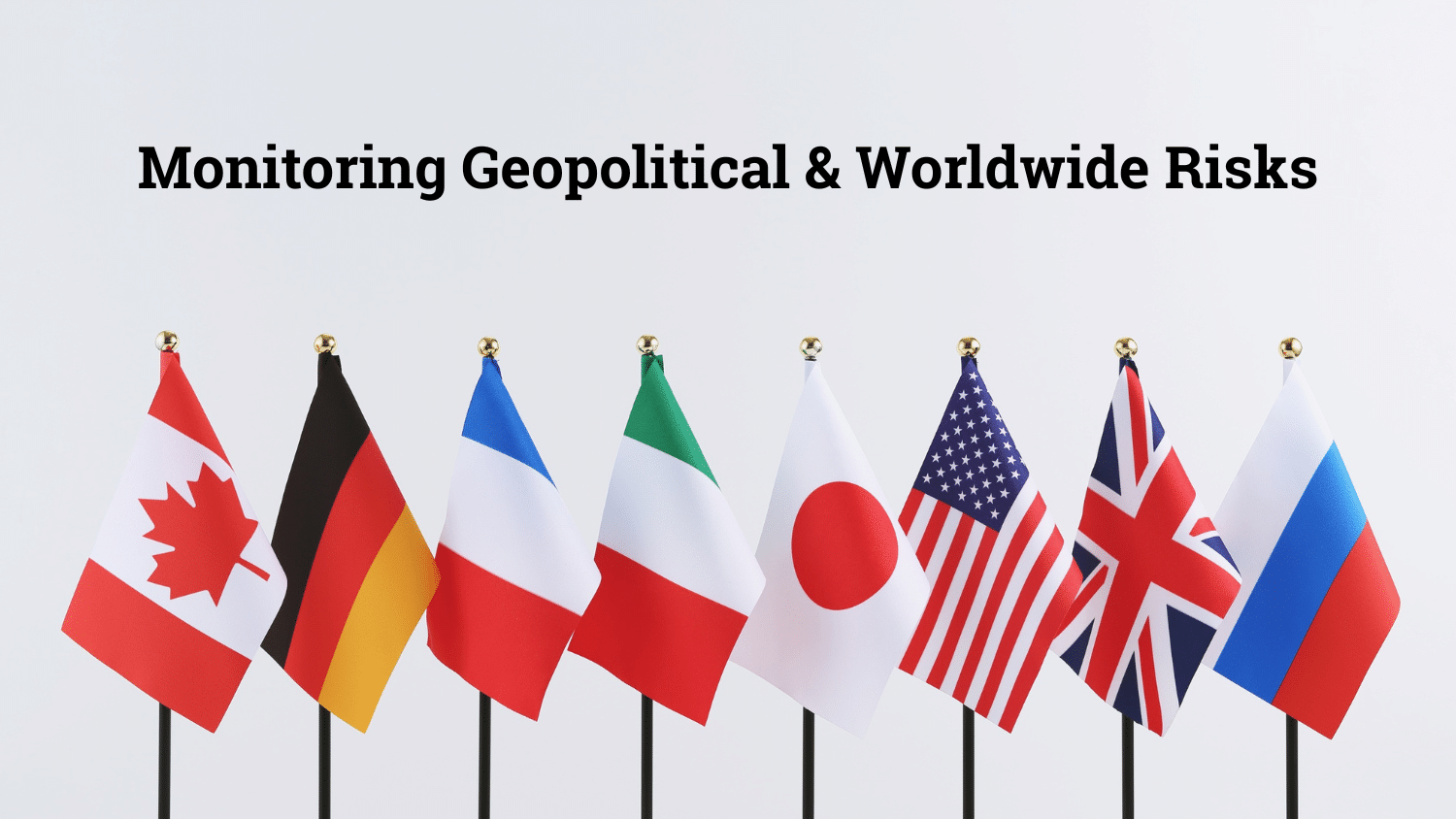
Geopolitical risk is no longer a distant backdrop — it is a high‑velocity force reshaping strategy, supply chains, consumer behavior and workforce sentiment. From rising nationalism to regional protectionism and rapidly escalating global tensions, organizations are confronting risks that move faster than traditional risk management tools are designed to handle.
Our thought paper, Monitoring Geopolitical and Worldwide Risks, explores how leading multinational organizations are rethinking how they detect, interpret and respond to fast‑changing geopolitical conditions.
Download the thought paper (PDF) to learn how organizations are moving beyond static risk assessments toward disciplined geopolitical readiness. An ADA-compliant version (Word) is also available for download at the bottom of this webpage.
What This Paper Explores
Based on direct engagement with ERM leaders at multinational organizations, this thought paper highlights emerging techniques being used to navigate today’s geopolitical uncertainty, including:
Embracing new accountability models for ERM leaders
How including tighter integration with Internal Audit to ensure geopolitical monitoring drives action — not just observation.
Building geopolitical “monitoring ecosystems”
How organizations are combining AI‑enabled command centers, local ground intelligence and government affairs input to separate signal from noise.
Placing more attention on velocity than probability
How organizations are triaging risks based on how quickly events can unfold — not just estimated impact or likelihood.
Enhancing resilience over prediction
Why leading organizations are shifting from trying to forecast outcomes to preparing “what‑if” playbooks anchored in strategic values.
Recognizing shifts in nationalism
Why the rise of consumer nationalism, regional protectionism and shifting employee sentiment warrant focus given the effect on brand relevance and market access.
Download the Thought Paper
About the Author
Bruce C. Branson, is an Alumni Distinguished Professor of Accounting and Associate Director of the ERM Initiative in the Poole College of Management at NC State University. His teaching and research is focused on enterprise risk management and financial reporting and includes an interest in the use of derivative securities and other hedging strategies for risk reduction and risk sharing. He also has examined the use of various forecasting and simulation tools to form expectations used in financial statement audits and in earnings forecasting research. He earned his Ph.D. at Florida State University.
For more tools and templates, visit our ERM Resource Center.
- Types: