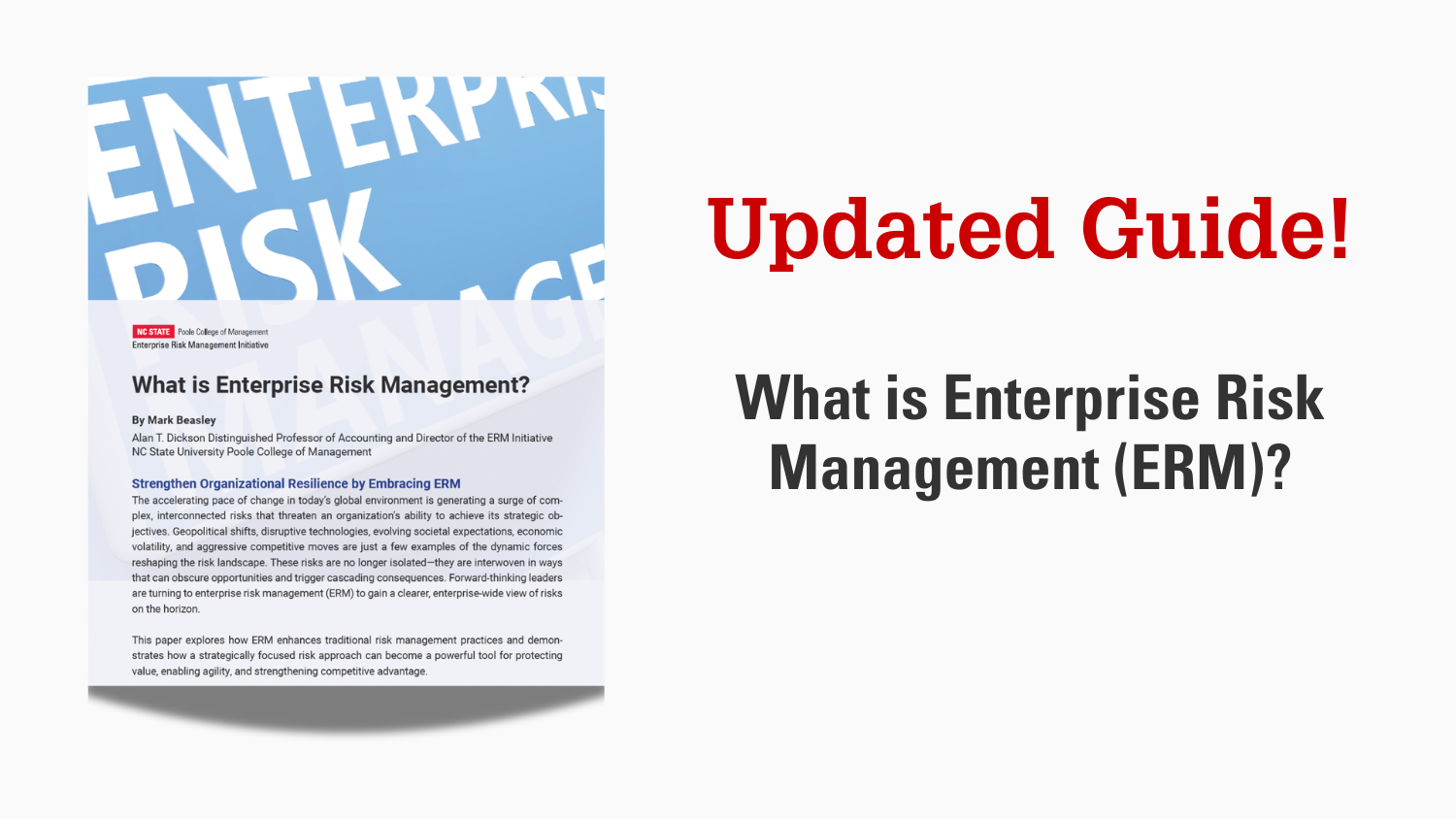
Enterprise Risk Management (ERM) equips leaders with a strategic approach to navigating uncertainty. Rather than reacting to risks after they occur, ERM provides a forward-looking, enterprise-wide lens that helps organizations anticipate and manage risks before they escalate.
While traditional risk management often operates in silos, ERM brings a holistic view that aligns risk oversight with an organization’s strategic priorities and long-term value creation.
Why ERM Matters Now
From geopolitical disruptions and regulatory shifts to cyber threats and stakeholder pressures, today’s risks are increasingly complex and interconnected. Traditional methods of risk management often miss what’s emerging just beyond the horizon.
Enterprise Risk Management helps leaders:
- Integrate risk thinking directly into strategy execution
- Identify risks that span across departments and silos
- Prioritize threats and opportunities that could impact strategic goals
- Strengthen resilience and decision-making under uncertainty
Limitations of Traditional Risk Management
Most organizations already engage in risk management—but often in a fragmented, siloed way.
Figure 1 – Traditional approach to risk management

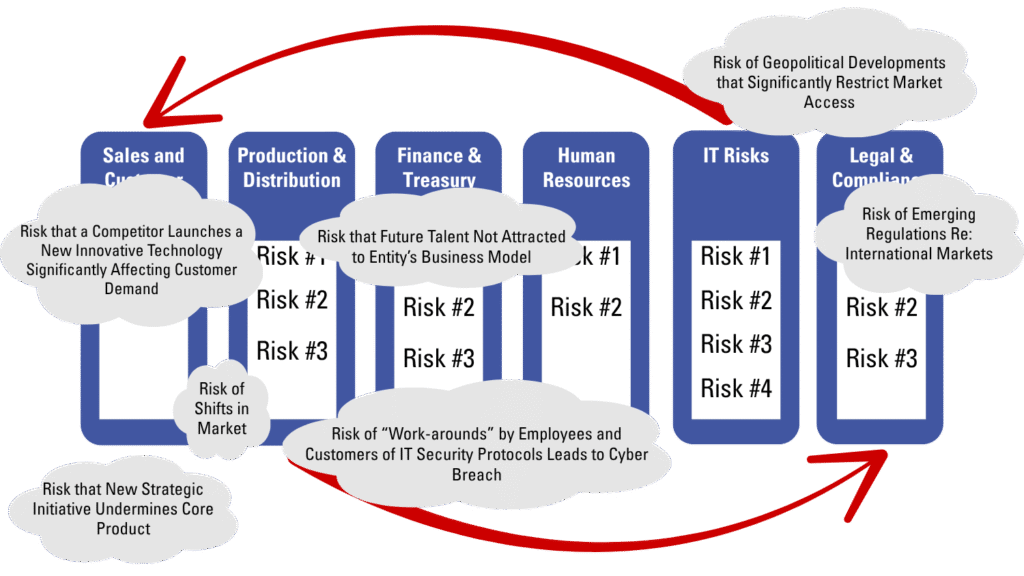
That structure can create blind spots and delay critical responses. Our updated thought paper outlines five key limitations of the traditional approach:
- Risks that fall between departments may be overlooked
- Responses in one silo can create unintended consequences elsewhere
- Internal focus may ignore disruptive external threats
- Strategic decisions may lack input from risk leaders
- Leadership may not have a complete view of top risks
Without an enterprise-wide risk perspective, organizations can be vulnerable to disruption and missed opportunities.
Figure 2 – Currently unknown, but knowable risks overlooked by traditional risk management
ERM as Strategic Capability
ERM is not just about avoiding risk. It’s about enabling agility, supporting innovation, and aligning risk oversight with what drives value for the organization—today and in the future.
An effective ERM process helps leadership:
- Start with a clear understanding of the organization’s “crown jewels” and strategic initiatives
- Apply a strategic lens to all types of risks—operational, compliance, reputational, and emerging
- Identify and prioritize the most critical enterprise risks
- Use Key Risk Indicators (KRIs) to monitor risk trends over time
- Plan proactive responses to reduce both likelihood and impact
This structured approach turns risk insight into competitive advantage.
Figure 3 – ERM should inform strategic decision-making before risks emerge.

Download the Full Paper: What is Enterprise Risk Management?
Our updated flagship paper outlines a modern approach to ERM, including:
- The strategic rationale for ERM in today’s environment
- Common pitfalls of siloed risk management
- A framework for implementing ERM as a continuous, value-driven process
- Tools such as the Bow-Tie Analysis and KRIs for monitoring and response
Author: Mark S. Beasley, Alan T. Dickson Distinguished Professor and Director of the ERM Initiative at NC State University
Published by: NC State ERM Initiative
Interested in Learning More About ERM?
The ERM Initiative in the Poole College of Management at NC State University is a leading source of research, guidance, and education for enterprise risk management. Through thought papers, events, and executive education, we help organizations strengthen risk oversight and build long-term resilience.
Visit our Resource Center or contact us to learn more.
Subscribe to ERM Insights
The latest research, insights and opportunities from the NC State ERM Initiative to help you and your organization lead with confidence.
- Categories: